The journey began at Kataoka Byobu Store in Sumida.
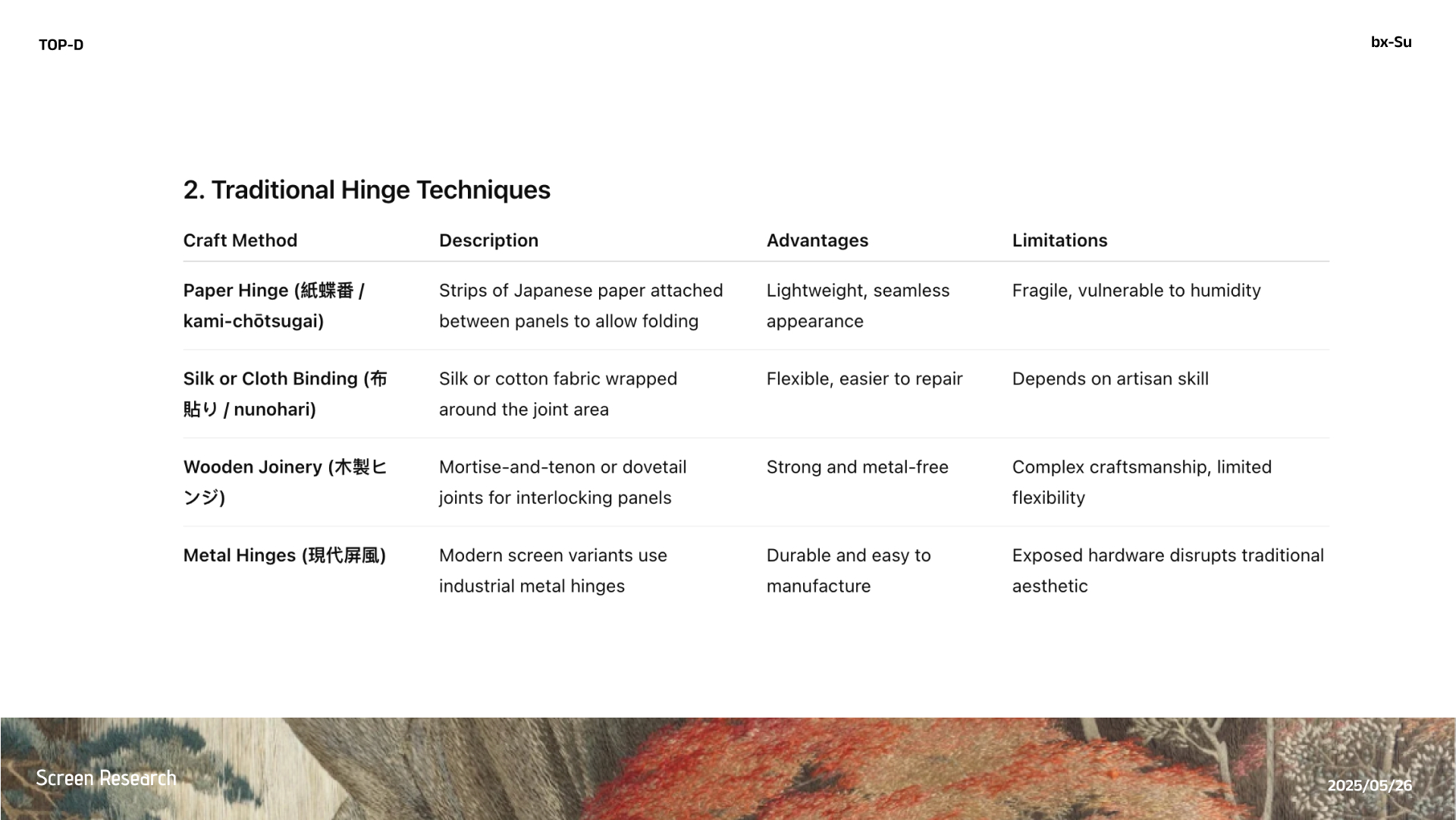
I was fascinated not by the decorative paintings, but by the "Karakuri" (Trick) mechanism. A traditional Japanese hinge system known as "Kami-chotsugai" (Paper Hinges) allows a 2D plane to flip, fold, and expand infinitely.
It defied the logic of modern industrial hinges. It was soft, yet rigid. Invisible, yet functional.
How to translate the logic of "Paper" into "Furniture"?
The challenge was to replicate the multi-axis movement using rigid materials.
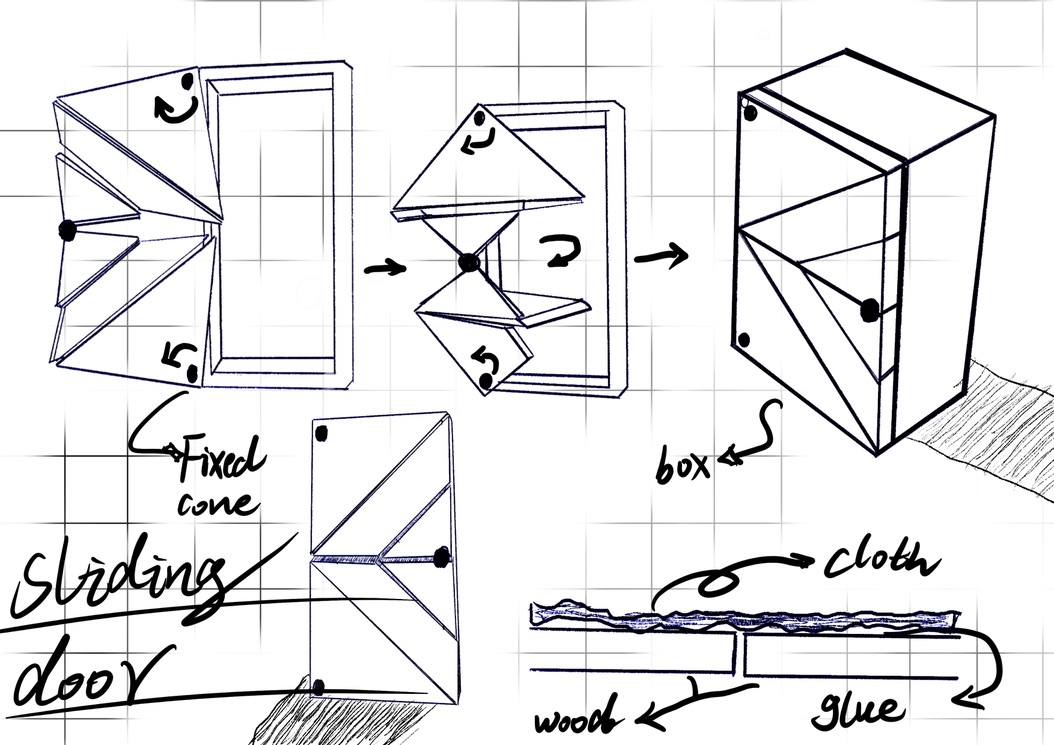
Analyzing the geometry. "Sliding Door" vs "Folding Cone". Deconstructing the movement into triangular sections.
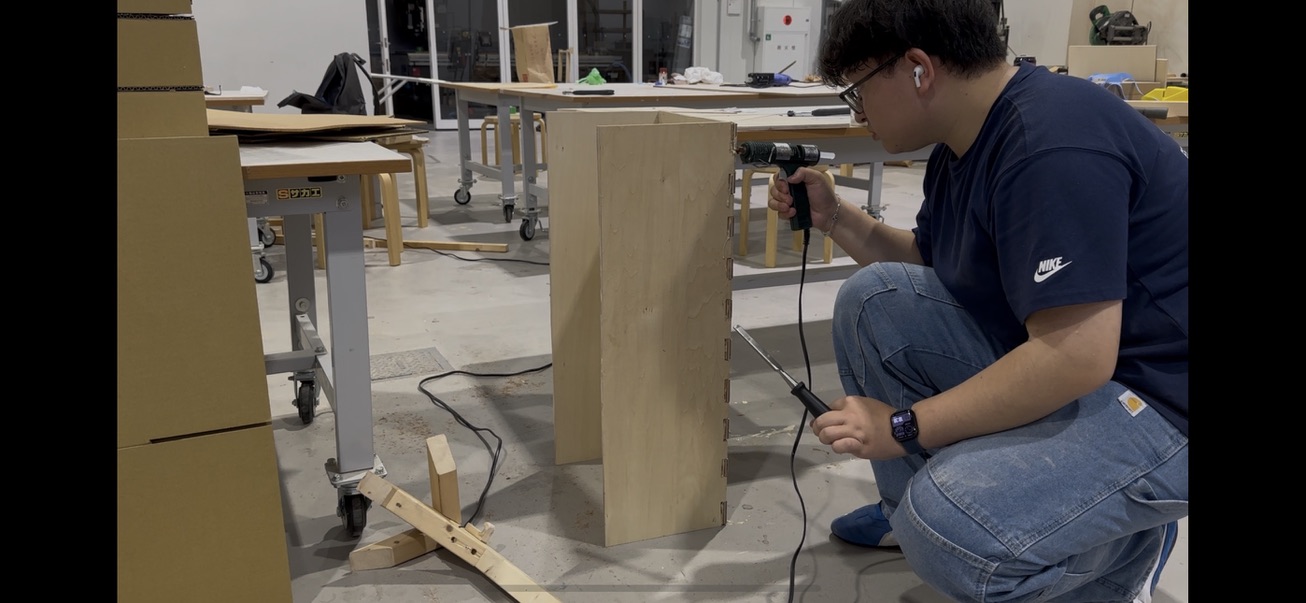
Paper glue was not secure for wood. Staples were ugly. The first prototype lacked the "Soul" of the mechanism.
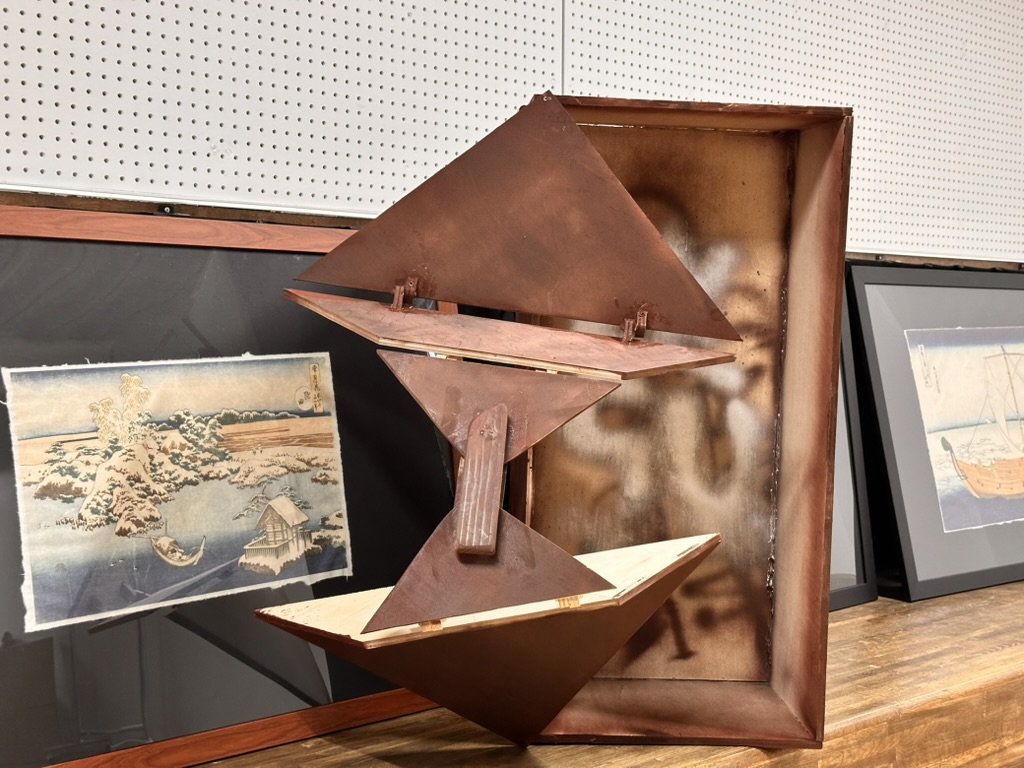
Replacing paper with multi-axis metal hinges. Achieving "Rigid Flexibility".
"How to make a box open like a flower?"
Testing the multi-axis linkage.
A storage unit that opens via Geometric Expansion.
The door is no longer a barrier, but a kinetic sculpture.
Engineered Wood + Metal Linkage.
Unlike traditional Byobu which stands passively, this object invites interaction. The door folds, slides, and pivots in a way that feels organic yet mechanical.
"Industrial Wabi-sabi".
I applied a faux-rust finish to contrast with the precise mechanical movement. It looks heavy and aged, but moves with the lightness of paper.